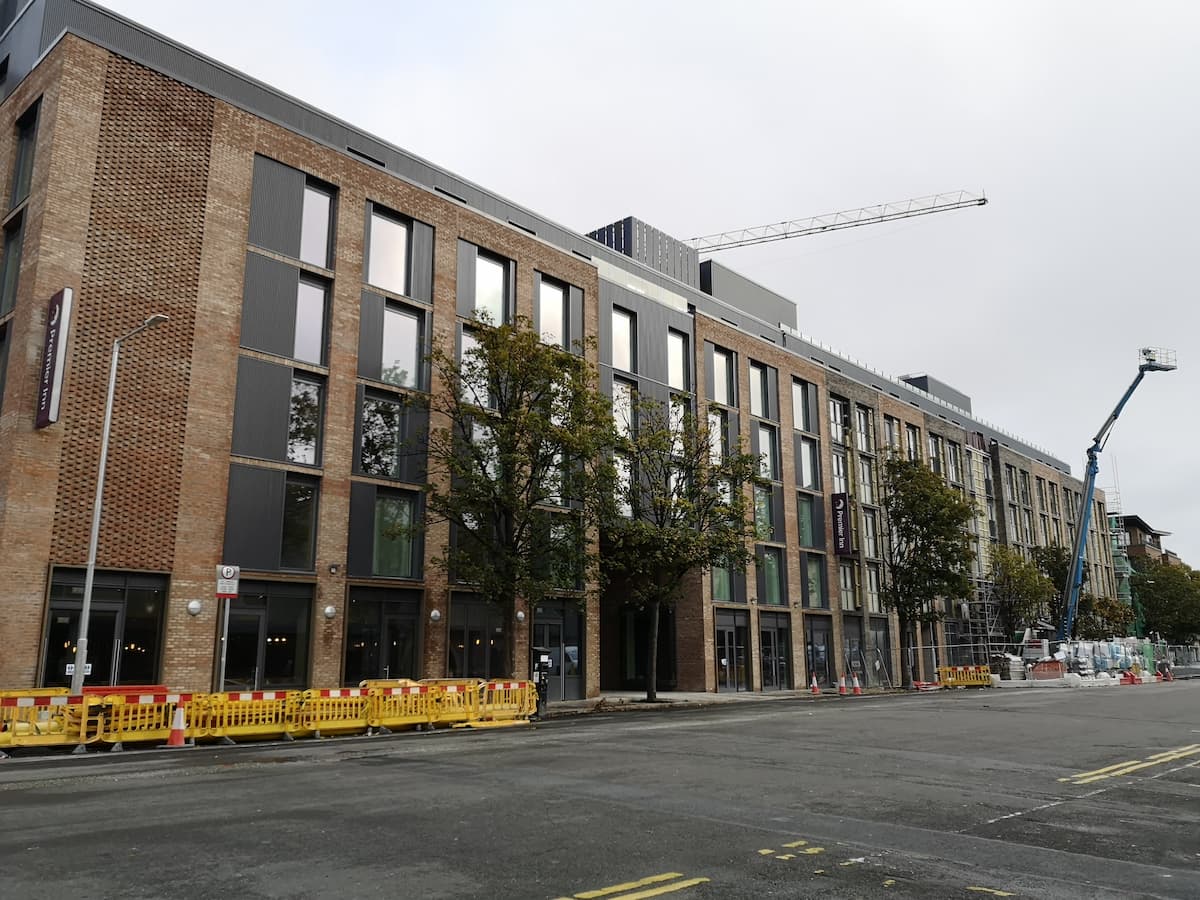
Cork Street is changing again, and the arrival of a new built-to-rent apartment development for students has brought a familiar mix of reactions. For some people, it may signal renewal, investment, and a more modern-looking streetscape. For others, especially those still searching for somewhere affordable to live, it can feel like another reminder of how difficult the housing situation has become.
That tension is what makes Cork Street worth paying attention to now. It is not just about one new building, but about what that building represents in a city where accommodation is scarce, expensive, and often out of reach for many people.
A visible sign of change
Large residential developments tend to alter more than the skyline. They change how a street feels, how it is used, and who imagines it as a place to live. On Cork Street, the new built-to-rent apartments, specifically students accommodation, are part of a wider shift in Dublin, where land close to the city centre is increasingly being developed for a rental market that already feels under pressure.
For some, that can look like progress. A newer building for students may bring activity, better-maintained public spaces, and a sense that an area is being invested in. For others, the same development raises harder questions about affordability, access, and who benefits from this kind of urban change.
Different reactions on the street
The feeling around a building like this is rarely simple. Existing residents may have mixed views. Some may welcome the idea of more people nearby, improved streetscape design, or a development that replaces a less attractive site. Others may worry about rising pressure on local rents, the pace of change, or whether a neighbourhood is becoming less recognisable over time.
For people looking for accommodation, the reaction is often more immediate and more personal. A brand-new apartment block can feel distant from reality if the rents are already well above what many people can afford. In that sense, the development may be seen less as a solution and more as a symbol of how disconnected new housing supply can be from everyday need.
What built-to-rent says about housing
Built-to-rent developments are now a familiar part of urban housing discussions, especially in cities with serious supply problems. They are often presented as part of the answer to housing demand, but they do not automatically solve the deeper issue of affordability. More units may be built, yet many people still find themselves locked out of the market.
That is why a development on Cork Street can feel like more than a local story. It reflects a bigger debate about what housing is for. Is it mainly an investment product, or is it a place where people can actually build a life? For many renters, that distinction matters.
The human side of the story
The most interesting part of this story is not just the building itself, but the different emotions it brings out. A person already living nearby may see change as both opportunity and disruption. A younger renter may see another block of expensive apartments as evidence that the city is moving further away from them. A long-time resident may wonder how much more the area can absorb before it begins to lose its character, especially when the multicultural environment tends to be bigger than the local one, almost to erase the Irish heritage.
Cork Street and the wider city
Cork Street is only one street, but it is part of a much larger pattern across Dublin. New developments appear, the streetscape changes, and the language around renewal sounds optimistic. Yet many people remain stuck in a rental market that is costly, insecure, and stressful.
A built-to-rent apartment block on Cork Street is not just a building. It is a sign of how Dublin is developing, who the city is being built for, and why housing continues to feel like such a difficult question. For some, it may look like progress. For others, it may look like exclusion.

